
Mastering the Indian River System is essential for high scores in exams like SSC GD 2026, UPSC, BPSC, Railway NTPC, and State Police. This guide covers Himalayan rivers, Peninsular rivers, their tributaries, and major river projects.


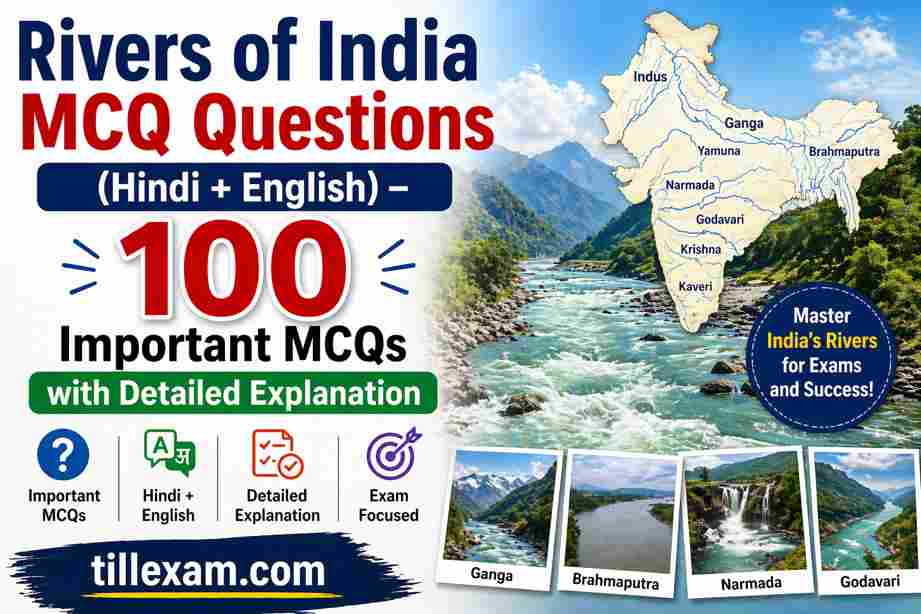
Rivers of India MCQs (1–100)
Q1. Which river is known as the ‘Dakshina Ganga’ (Ganga of the South)?
(किस नदी को ‘दक्षिण गंगा’ के नाम से जाना जाता है?)
A. Krishna | B. Godavari | C. Kaveri | D. Narmada
Answer: B. Godavari
Explanation: Godavari is the longest peninsular river in India. Due to its large size and vast extent, it is often called the ‘Dakshina Ganga’.
व्याख्या: गोदावरी भारत की सबसे लंबी प्रायद्वीपीय नदी है। इसके विशाल आकार और विस्तार के कारण इसे अक्सर ‘दक्षिण गंगा’ कहा जाता है।
Q2. The ‘Majuli’ island, the world’s largest river island, is located in which river?
(विश्व का सबसे बड़ा नदी द्वीप ‘माजुली’ किस नदी में स्थित है?)
A. Ganga | B. Brahmaputra | C. Indus | D. Mahanadi
Answer: B. Brahmaputra
Explanation: Majuli is located in the Brahmaputra River in Assam. It is the first island to be made a district in India.
व्याख्या: माजुली असम में ब्रह्मपुत्र नदी में स्थित है। यह भारत का पहला ऐसा द्वीप है जिसे जिला बनाया गया है।
Q3. Which river originates from the Amarkantak plateau in Madhya Pradesh?
(मध्य प्रदेश के अमरकंटक पठार से किस नदी का उद्गम होता है?)
A. Tapti | B. Narmada | C. Betwa | D. Godavari
Answer: B. Narmada
Explanation: The Narmada River rises from the Amarkantak Range and flows westward into the Arabian Sea through a rift valley.
व्याख्या: नर्मदा नदी अमरकंटक श्रेणी से निकलती है और एक भ्रंश घाटी से होकर पश्चिम की ओर अरब सागर में गिरती है।
📢 Boost your exam preparation with our daily free mock tests on tillexam.com
Q4. Which river is known as the ‘Sorrow of Bihar’?
(किस नदी को ‘बिहार का शोक’ कहा जाता है?)
A. Gandak | B. Kosi | C. Son | D. Damodar
Answer: B. Kosi
Explanation: The Kosi river frequently changes its path, causing devastating floods in Bihar every year.
व्याख्या: कोसी नदी अक्सर अपना रास्ता बदलती है, जिससे हर साल बिहार में विनाशकारी बाढ़ आती है।
Q5. At which place do the Alaknanda and Bhagirathi rivers meet to form the Ganga?
(अलकनंदा और भागीरथी नदियाँ किस स्थान पर मिलकर गंगा का निर्माण करती हैं?)
A. Rudraprayag | B. Devprayag | C. Karnaprayag | D. Rishikesh
Answer: B. Devprayag
Explanation: At Devprayag in Uttarakhand, the Alaknanda meets the Bhagirathi, and from this point, the river is known as the Ganga.
व्याख्या: उत्तराखंड के देवप्रयाग में अलकनंदा और भागीरथी का मिलन होता है, और इसी बिंदु से नदी को गंगा के नाम से जाना जाता है।
Q6. Which river is known as ‘Tsangpo’ in Tibet?
(तिब्बत में किस नदी को ‘त्सांगपो’ के नाम से जाना जाता है?)
A. Indus | B. Sutlej | C. Brahmaputra | D. Teesta
Answer: C. Brahmaputra
Explanation: The Brahmaputra originates in Tibet where it is called Tsangpo. It enters India through Arunachal Pradesh as the Dihang.
व्याख्या: ब्रह्मपुत्र का उद्गम तिब्बत में होता है जहाँ इसे त्सांगपो कहा जाता है। यह अरुणाचल प्रदेश के माध्यम से दिहांग के रूप में भारत में प्रवेश करती है।
🚀 Get latest exam notifications and syllabus updates only at tillexam.com
Q7. Which is the longest tributary of the river Ganga?
(गंगा नदी की सबसे लंबी सहायक नदी कौन सी है?)
A. Gandak | B. Yamuna | C. Son | D. Kosi
Answer: B. Yamuna
Explanation: Yamuna originates from the Yamunotri glacier and flows for about 1,376 km before joining Ganga at Prayagraj.
व्याख्या: यमुना यमुनोत्री ग्लेशियर से निकलती है और प्रयागराज में गंगा में मिलने से पहले लगभग 1,376 किमी तक बहती है।
Q8. The ‘Hirakud Dam’, one of the longest dams in the world, is built on which river?
(विश्व के सबसे लंबे बांधों में से एक ‘हीराकुंड बांध’ किस नदी पर बना है?)
A. Krishna | B. Mahanadi | C. Godavari | D. Narmada
Answer: B. Mahanadi
Explanation: Hirakud Dam is located in Odisha on the Mahanadi River.
व्याख्या: हीराकुंड बांध ओडिशा में महानदी पर स्थित है।
Q9. Which river flows through a rift valley between the Vindhya and Satpura ranges?
(विंध्य और सतपुड़ा श्रेणियों के बीच भ्रंश घाटी से होकर कौन सी नदी बहती है?)
A. Narmada | B. Tapti | C. Mahi | D. Luni
Answer: A. Narmada
Explanation: Narmada flows westward through a rift valley created by the down-warping of the Earth’s crust between these two ranges.
व्याख्या: नर्मदा इन दो श्रेणियों के बीच पृथ्वी की पपड़ी के नीचे की ओर झुकने से बनी भ्रंश घाटी के माध्यम से पश्चिम की ओर बहती है।
📚 Download free PDF study materials for all competitive exams at tillexam.com
Q10. Which river is known as the ‘Salt River’ of India?
(किस नदी को भारत की ‘नमक नदी’ कहा जाता है?)
A. Mahi | B. Luni | C. Sabarmati | D. Banas
Answer: B. Luni
Explanation: The Luni river flows through the Thar Desert in Rajasthan and ends in the Rann of Kutch. It has high salinity.
व्याख्या: लूणी नदी राजस्थान के थार मरुस्थल से होकर बहती है और कच्छ के रण में समाप्त होती है। इसमें उच्च लवणता होती है।
Q11. Which river forms the famous ‘Dhuandhar Falls’ near Jabalpur?
(जबलपुर के पास प्रसिद्ध ‘धुआंधार जलप्रपात’ कौन सी नदी बनाती है?)
A. Tapti | B. Narmada | C. Chambal | D. Betwa
Answer: B. Narmada
Explanation: The Narmada river creates the Dhuandhar falls where it drops over marble rocks in Bhedaghat.
व्याख्या: नर्मदा नदी भेड़ाघाट में संगमरमर की चट्टानों पर गिरते हुए धुआंधार जलप्रपात बनाती है।
Q12. The ‘Tehri Dam’, the highest dam in India, is built on which river?
(भारत का सबसे ऊँचा बांध ‘टिहरी बांध’ किस नदी पर बना है?)
A. Alaknanda | B. Bhagirathi | C. Yamuna | D. Mandakini
Answer: B. Bhagirathi
Explanation: Located in Uttarakhand, the Tehri Dam is built on the Bhagirathi river, a primary headstream of the Ganga.
व्याख्या: उत्तराखंड में स्थित टिहरी बांध गंगा की प्राथमिक मुख्य धारा भागीरथी नदी पर बना है।
🔥 Solve 5000+ Subject-wise MCQs for better practice at tillexam.com
Q13. Which river is often called the ‘Life Line of Kerala’?
(किस नदी को अक्सर ‘केरल की जीवन रेखा’ कहा जाता है?)
A. Pamba | B. Periyar | C. Bharatapuzha | D. Kabini
Answer: B. Periyar
Explanation: Periyar is the longest river in Kerala and provides a major source of drinking water and electricity.
व्याख्या: पेरियार केरल की सबसे लंबी नदी है और पीने के पानी और बिजली का एक प्रमुख स्रोत प्रदान करती है।
Q14. The ‘Shivanasamudra Falls’ is formed by which river?
( ‘शिवनासमुद्रम जलप्रपात’ किस नदी द्वारा निर्मित है?)
A. Krishna | B. Kaveri | C. Godavari | D. Tungabhadra
Answer: B. Kaveri
Explanation: The Kaveri river drops to form the Shivanasamudra Falls in Karnataka, which is also the site of one of the first hydroelectric power plants in Asia.
व्याख्या: कावेरी नदी कर्नाटक में शिवनासमुद्रम जलप्रपात बनाती है, जो एशिया के पहले जलविद्युत संयंत्रों में से एक का स्थल भी है।
Q15. Which river crosses the Tropic of Cancer twice in India?
(भारत में कौन सी नदी कर्क रेखा को दो बार पार करती है?)
A. Narmada | B. Mahi | C. Tapti | D. Chambal
Answer: B. Mahi
Explanation: The Mahi River originates in MP, flows into Rajasthan, and then into Gujarat, crossing the Tropic of Cancer twice.
व्याख्या: माही नदी मध्य प्रदेश से निकलती है, राजस्थान में बहती है और फिर गुजरात में, कर्क रेखा को दो बार पार करती है।
✅ Join our daily live quiz and win exciting rewards at tillexam.com
Q16. The ‘Sardar Sarovar Dam’ is constructed across which river?
( ‘सरदार सरोवर बांध’ किस नदी पर बनाया गया है?)
A. Tapti | B. Narmada | C. Sabarmati | D. Mahi
Answer: B. Narmada
Explanation: This mega project is located in Gujarat on the Narmada River to provide water to drought-prone areas.
व्याख्या: यह मेगा प्रोजेक्ट सूखा प्रवण क्षेत्रों को पानी उपलब्ध कराने के लिए गुजरात में नर्मदा नदी पर स्थित है।
Q17. Which river is known as the ‘Sorrow of Bengal’?
(किस नदी को ‘बंगाल का शोक’ कहा जाता है?)
A. Kosi | B. Damodar | C. Hooghly | D. Mahanadi
Answer: B. Damodar
Explanation: Damodar was known for its floods in West Bengal. The Damodar Valley Project was launched to control these floods.
व्याख्या: दामोदर पश्चिम बंगाल में अपनी बाढ़ के लिए जानी जाती थी। इन बाढ़ों को नियंत्रित करने के लिए दामोदर घाटी परियोजना शुरू की गई थी।
Q18. The ‘Indira Gandhi Canal’ takes its water from which confluence?
( ‘इंदिरा गांधी नहर’ अपना पानी किस संगम से लेती है?)
A. Sutlej and Yamuna | B. Sutlej and Beas | C. Ravi and Chenab | D. Jhelum and Chenab
Answer: B. Sutlej and Beas
Explanation: The canal originates from the Harike Barrage, located at the confluence of the Sutlej and Beas rivers in Punjab.
व्याख्या: यह नहर पंजाब में सतलुज और ब्यास नदियों के संगम पर स्थित हरिके बैराज से निकलती है।
📢 Learn from experts and clear your exam doubts at tillexam.com
Q19. Which river originates from the ‘Siachen Glacier’?
(किस नदी का उद्गम ‘सियाचिन ग्लेशियर’ से होता है?)
A. Nubra | B. Shyok | C. Gilgit | D. Hunza
Answer: A. Nubra
Explanation: The Nubra River originates from the Siachen Glacier and is a tributary of the Shyok River.
व्याख्या: नुब्रा नदी सियाचिन ग्लेशियर से निकलती है और श्योक नदी की एक सहायक नदी है।
Q20. Which river system is the largest in India?
(भारत में कौन सी नदी प्रणाली सबसे बड़ी है?)
A. Indus System | B. Ganga System | C. Brahmaputra System | D. Godavari System
Answer: B. Ganga System
Explanation: The Ganga river basin is the largest in India, covering about one-fourth of the country’s total area.
व्याख्या: गंगा नदी का बेसिन भारत में सबसे बड़ा है, जो देश के कुल क्षेत्रफल का लगभग एक‑चौथाई हिस्सा कवर करता है।
Q21. The ‘Bhakra Nangal’ project is built on which river?
( ‘भाखड़ा नांगल’ परियोजना किस नदी पर बनी है?)
A. Ravi | B. Sutlej | C. Chenab | D. Jhelum
Answer: B. Sutlej
Explanation: It is one of the highest gravity dams in the world, located in Himachal Pradesh and Punjab.
व्याख्या: यह दुनिया के सबसे ऊंचे गुरुत्वाकर्षण बांधों में से एक है, जो हिमाचल प्रदेश और पंजाब में स्थित है।
🚀 Level up your preparation with tillexam.com test series
Q22. Which river flows into the Arabian Sea?
(कौन सी नदी अरब सागर में गिरती है?)
A. Krishna | B. Narmada | C. Godavari | D. Kaveri
Answer: B. Narmada
Explanation: Most peninsular rivers flow into the Bay of Bengal, but Narmada and Tapti flow westward into the Arabian Sea.
व्याख्या: अधिकांश प्रायद्वीपीय नदियों के विपरीत, जो बंगाल की खाड़ी में गिरती हैं, नर्मदा और ताप्ती पश्चिम की ओर बहकर अरब सागर में गिरती हैं।
Q23. ‘Yarlung Tsangpo’ is the name given to which river in Tibet?
(तिब्बत में किस नदी को ‘यारलुंग त्सांगपो’ नाम दिया गया है?)
A. Indus | B. Brahmaputra | C. Ganga | D. Sutlej
Answer: B. Brahmaputra
Explanation: This is the Tibetan name for the Brahmaputra before it enters India.
व्याख्या: भारत में प्रवेश करने से पहले ब्रह्मपुत्र का यह तिब्बती नाम है।
Q24. Which river is known as the ‘Open Sewer’ of India?
(किस नदी को भारत का ‘खुला नाला’ कहा जाता है?)
A. Ganga | B. Yamuna | C. Damodar | D. Sabarmati
Answer: B. Yamuna
Explanation: Due to high levels of pollution, especially in the Delhi-Agra stretch, the Yamuna is often called an open sewer.
व्याख्या: प्रदूषण के उच्च स्तर के कारण, विशेष रूप से दिल्ली-आगरा खिंचाव में, यमुना को अक्सर खुला नाला कहा जाता है।
📚 Get topic-wise detailed notes for free on tillexam.com
Q25. The city of Lucknow is situated on the banks of which river?
(लखनऊ शहर किस नदी के किनारे स्थित है?)
A. Ganga | B. Yamuna | C. Gomti | D. Sarayu
Answer: C. Gomti
Explanation: Gomti is a tributary of the Ganga and flows through the heart of Lucknow.
व्याख्या: गोमती गंगा की एक सहायक नदी है और लखनऊ के हृदय स्थल से होकर बहती है।
Q26. Which river forms the ‘Estuary’ instead of a Delta?
(कौन सी नदी डेल्टा के बजाय ‘ज्वारनदमुख’ (Estuary) बनाती है?)
A. Ganga | B. Narmada | C. Mahanadi | D. Godavari
Answer: B. Narmada
Explanation: West-flowing rivers like Narmada and Tapti flow through hard rocks and do not carry enough silt to form deltas.
व्याख्या: नर्मदा और ताप्ती जैसी पश्चिम की ओर बहने वाली नदियाँ कठोर चट्टानों से होकर बहती हैं और डेल्टा बनाने के लिए पर्याप्त गाद नहीं ले जाती हैं।
Q27. ‘Nagarjuna Sagar Dam’ is built on which river?
( ‘नागार्जुन सागर बांध’ किस नदी पर बना है?)
A. Godavari | B. Krishna | C. Kaveri | D. Penna
Answer: B. Krishna
Explanation: Located on the border of Telangana and Andhra Pradesh, it is one of the largest masonry dams.
व्याख्या: तेलंगाना और आंध्र प्रदेश की सीमा पर स्थित, यह सबसे बड़े चिनाई वाले बांधों में से एक है।
🔥 Daily current affairs for all competitive exams at tillexam.com
Q28. The ‘Sarayu River’ is famous for which holy city on its bank?
(सरयू नदी अपने किनारे स्थित किस पवित्र शहर के लिए प्रसिद्ध है?)
A. Varanasi | B. Ayodhya | C. Haridwar | D. Mathura
Answer: B. Ayodhya
Explanation: Ayodhya, the birthplace of Lord Rama, is situated on the banks of the Sarayu river.
व्याख्या: भगवान राम की जन्मस्थली अयोध्या सरयू नदी के तट पर स्थित है।
Q29. Which is the largest tributary of the Indus river?
(सिंधु नदी की सबसे बड़ी सहायक नदी कौन सी है?)
A. Jhelum | B. Chenab | C. Ravi | D. Sutlej
Answer: B. Chenab
Explanation: Chenab is the largest tributary of the Indus in terms of volume of water.
व्याख्या: जल की मात्रा के मामले में चिनाब सिंधु की सबसे बड़ी सहायक नदी है।
Q30. Which river is known as the ‘Dakshina Pinakini’?
(किस नदी को ‘दक्षिण पिनाकिनी’ के नाम से जाना जाता है?)
A. Kaveri | B. Ponnaiyar | C. Palar | D. Vaigai
Answer: B. Ponnaiyar
Explanation: Ponnaiyar is referred to as Dakshina Pinakini in Sanskrit literature.
व्याख्या: संस्कृत साहित्य में पोन्नैयार को दक्षिण पिनाकिनी कहा गया है।
📢 Your success partner in competitive exams tillexam.com
Q31. Which river is known as ‘Vridha Ganga’?
(किस नदी को ‘वृद्ध गंगा’ के नाम से जाना जाता है?)
A. Godavari | B. Krishna | C. Kaveri | D. Mahanadi
Answer: A. Godavari
Explanation: Due to its age and length, Godavari is also called the ‘Old Ganga’.
व्याख्या: अपनी आयु और लंबाई के कारण गोदावरी को ‘वृद्ध गंगा’ भी कहा जाता है।
Q32. The ‘Almatti Dam’ is built on which river?
( ‘अलमट्टी बांध’ किस नदी पर बना है?)
A. Krishna | B. Godavari | C. Kaveri | D. Tungabhadra
Answer: A. Krishna
Explanation: It is a hydroelectric project on the Krishna River in North Karnataka.
व्याख्या: यह उत्तरी कर्नाटक में कृष्णा नदी पर एक जलविद्युत परियोजना है।
Q33. Which river is called the ‘Handmaid of the Narmada’?
(किस नदी को ‘नर्मदा की दासी’ कहा जाता है?)
A. Mahi | B. Tapti | C. Sabarmati | D. Luni
Answer: B. Tapti
Explanation: Tapti flows parallel to the Narmada in the rift valley and is thus given this nickname.
व्याख्या: ताप्ती भ्रंश घाटी में नर्मदा के समानांतर बहती है और इसीलिए इसे यह उपनाम दिया गया है।
🚀 Experience real exam interface with our mock tests on tillexam.com
Q34. The ‘Tungabhadra’ is a major tributary of?
( ‘तुंगभद्रा’ किसकी प्रमुख सहायक नदी है?)
A. Krishna | B. Godavari | C. Kaveri | D. Mahanadi
Answer: A. Krishna
Explanation: It is formed by the union of two rivers, Tunga and Bhadra, and joins the Krishna in Andhra Pradesh.
व्याख्या: यह तुंगा और भद्रा दो नदियों के मिलन से बनती है और आंध्र प्रदेश में कृष्णा से मिल जाती है।
Q35. Which river originates from ‘Verinag Spring’ in Kashmir?
(कश्मीर में ‘वेरीनाग झरने’ से किस नदी का उद्गम होता है?)
A. Chenab | B. Jhelum | C. Ravi | D. Indus
Answer: B. Jhelum
Explanation: Jhelum flows through the city of Srinagar and the Wular lake.
व्याख्या: झेलम श्रीनगर शहर और वुलर झील से होकर बहती है।
Q36. The ‘Chambal River’ is part of which river basin?
(चंबल नदी किस नदी बेसिन का हिस्सा है?)
A. Ganga Basin | B. Yamuna Basin | C. Narmada Basin | D. Indus Basin
Answer: B. Yamuna Basin
Explanation: Chambal is a major tributary of the Yamuna, famous for its badland topography.
व्याख्या: चंबल यमुना की एक प्रमुख सहायक नदी है, जो अपनी बीहड़ स्थलाकृति के लिए प्रसिद्ध है।
📚 Best collections of previous year question papers at tillexam.com
Q37. Which river is known as the ‘Red River’ of India?
(भारत की ‘लाल नदी’ किसे कहा जाता है?)
A. Godavari | B. Brahmaputra | C. Krishna | D. Damodar
Answer: B. Brahmaputra
Explanation: During monsoons, it carries a heavy load of iron-rich red silt.
व्याख्या: मानसून के दौरान, यह लोह‑समृद्ध लाल गाद का भारी भार ले जाती है।
Q38. The ‘Sivasamudram’ is an island formed by which river?
( ‘शिवसमुद्रम’ किस नदी द्वारा निर्मित एक द्वीप है?)
A. Kaveri | B. Krishna | C. Godavari | D. Penna
Answer: A. Kaveri
Explanation: This island in Karnataka is the site of India’s first major hydroelectric power station.
व्याख्या: कर्नाटक में यह द्वीप भारत के पहले प्रमुख जलविद्युत शक्ति केंद्र का स्थल है।
Q39. Which river originates from the ‘Rakshas Tal’?
(किस नदी का उद्गम ‘राक्षस ताल’ से होता है?)
A. Indus | B. Sutlej | C. Brahmaputra | D. Ghaghra
Answer: B. Sutlej
Explanation: Rakshas Tal is located in Tibet, near the source of the Indus and Brahmaputra.
व्याख्या: राक्षस ताल तिब्बत में स्थित है, जो सिंधु और ब्रह्मपुत्र के उद्गम स्थल के पास है।
🔥 Special discounts on premium mock tests at tillexam.com
Q40. Which river is called ‘Dakshina Kashi’?
(किस नदी को ‘दक्षिण काशी’ कहा जाता है?)
A. Pamba | B. Godavari | C. Kaveri | D. Krishna
Answer: A. Pamba
Explanation: The Pamba river in Kerala is considered very sacred and is associated with Sabarimala.
व्याख्या: केरल की पम्बा नदी को बहुत पवित्र माना जाता है और यह सबरीमाला से जुड़ी है।
Q41. Which river is known as the ‘Life Line of Sikkim’?
(किस नदी को ‘सिक्किम की जीवन रेखा’ कहा जाता है?)
A. Manas | B. Rangeet | C. Teesta | D. Sankosh
Answer: C. Teesta
Explanation: Teesta originates in the Himalayas and flows through Sikkim and West Bengal before entering Bangladesh.
व्याख्या: तीस्ता हिमालय से निकलती है और बांग्लादेश में प्रवेश करने से पहले सिक्किम और पश्चिम बंगाल से होकर बहती है।
Q42. Which river flows into the ‘Gulf of Khambhat’?
(कौन सी नदी ‘खंभात की खाड़ी’ में गिरती है?)
A. Narmada | B. Tapti | C. Mahi | D. All of the above
Answer: D. All of the above
Explanation: These are major west-flowing rivers that empty into the Gulf of Khambhat.
व्याख्या: ये प्रमुख पश्चिम की ओर बहने वाली नदियाँ हैं जो खंभात की खाड़ी में गिरती हैं।
📢 Practice more and score high with tillexam.com
Q43. The ‘Krishnaraja Sagar Dam’ is built on which river?
( ‘कृष्णराज सागर बांध’ किस नदी पर बना है?)
A. Krishna | B. Kaveri | C. Tungabhadra | D. Ghataprabha
Answer: B. Kaveri
Explanation: It was constructed in Mysore, Karnataka, and is famous for the Brindavan Gardens.
व्याख्या: इसका निर्माण कर्नाटक के मैसूर में किया गया था और यह वृंदावन गार्डन के लिए प्रसिद्ध है।
Q44. The ‘Dhuandhar Falls’ is located on which river?
( ‘धुआंधार जलप्रपात’ किस नदी पर स्थित है?)
A. Tapti | B. Narmada | C. Mahanadi | D. Indravati
Answer: B. Narmada
Explanation: The falls are located at Bhedaghat, Jabalpur.
व्याख्या: यह जलप्रपात जबलपुर के भेड़ाघाट में स्थित है।
Q45. The ‘Sharavati River’ is famous for which waterfall?
(शरावती नदी किस जलप्रपात के लिए प्रसिद्ध है?)
A. Jog Falls | B. Hundru Falls | C. Dudhsagar Falls | D. Kapildhara
Answer: A. Jog Falls
Explanation: Jog Falls in Karnataka is one of the highest plunge waterfalls in India.
व्याख्या: कर्नाटक में जोग जलप्रपात भारत के सबसे ऊंचे जलप्रपातों में से एक है।
Q46. The ‘Mettur Dam’ is built in which state?
( ‘मेट्टूर बांध’ किस राज्य में बना है?)
A. Karnataka | B. Tamil Nadu | C. Kerala | D. Andhra Pradesh
Answer: B. Tamil Nadu
Explanation: It is one of the largest dams in India, built across the Kaveri river.
व्याख्या: यह भारत के सबसे बड़े बांधों में से एक है, जो कावेरी नदी पर बना है।
Q47. Which river is known as the ‘Sorrow of Odisha’?
(किस नदी को ‘ओडिशा का शोक’ कहा जाता है?)
A. Mahanadi | B. Brahmani | C. Baitarani | D. Subarnarekha
Answer: B. Brahmani
Explanation: Due to its flooding nature, it was historically known by this name.
व्याख्या: अपने बाढ़ वाले स्वभाव के कारण, इसे ऐतिहासिक रूप से इस नाम से जाना जाता था।
Q48. The ‘Hogenakkal Falls’ is located on which river?
( ‘होगेनक्कल जलप्रपात’ किस नदी पर स्थित है?)
A. Krishna | B. Kaveri | C. Penna | D. Vaigai
Answer: B. Kaveri
Explanation: It is often referred to as the ‘Niagara Falls of India’.
व्याख्या: इसे अक्सर ‘भारत का नियाग्रा जलप्रपात’ कहा जाता है।
Q49. Which river basin is known as the ‘Ruhr of India’?
(किस नदी बेसिन को ‘भारत का रूर’ कहा जाता है?)
A. Ganga Basin | B. Damodar Basin | C. Mahanadi Basin | D. Godavari Basin
Answer: B. Damodar Basin
Explanation: Due to its immense mineral and coal reserves, similar to Germany’s Ruhr.
व्याख्या: इसके विशाल खनिज और कोयले के भंडार के कारण, जर्मनी के रूर के समान।
Q50. Which is the only major perennial river of Peninsular India?
(प्रायद्वीपीय भारत की एकमात्र प्रमुख बारहमासी नदी कौन सी है?)
A. Godavari | B. Kaveri | C. Krishna | D. Narmada
Answer: B. Kaveri
Explanation: It receives water from both South-West and North-East monsoons.
व्याख्या: इसे दक्षिण‑पश्चिम और उत्तर‑पूर्व दोनों मानसूनों से पानी मिलता है।
Q51. Which river originates from the ‘Siachen Glacier’?
(किस नदी का उद्गम ‘सियाचिन ग्लेशियर’ से होता है?)
A. Nubra | B. Shyok | C. Gilgit | D. Hunza
Answer: A. Nubra
Explanation: Nubra is a tributary of the Shyok and comes from the Siachen region.
व्याख्या: नुब्रा श्योक की एक सहायक नदी है और सियाचिन क्षेत्र से आती है।
Q52. The ‘Rihand Dam’ is built on which tributary of the Son?
( ‘रिहंद बांध’ सोन की किस सहायक नदी पर बना है?)
A. Rihand | B. Koel | C. Kanhar | D. Ghaggar
Answer: A. Rihand
Explanation: It creates the Govind Ballabh Pant Sagar, India’s largest artificial lake.
व्याख्या: यह गोविंद बल्लभ पंत सागर बनाता है, जो भारत की सबसे बड़ी कृत्रिम झील है।
Q53. Which river is the northern boundary of the Deccan Plateau?
(कौन सी नदी दक्कन के पठार की उत्तरी सीमा है?)
A. Ganga | B. Narmada | C. Yamuna | D. Tapti
Answer: B. Narmada
Explanation: It flows along the northern edge of the plateau.
व्याख्या: यह पठार के उत्तरी किनारे पर बहती है।
Q54. Which river enters Bangladesh as the ‘Jamuna’?
(कौन सी नदी ‘जमुना’ के रूप में बांग्लादेश में प्रवेश करती है?)
A. Ganga | B. Brahmaputra | C. Teesta | D. Mahananda
Answer: B. Brahmaputra
Explanation: After entering Bangladesh, the main branch of the Brahmaputra is called Jamuna.
व्याख्या: बांग्लादेश में प्रवेश करने के बाद, ब्रह्मपुत्र की मुख्य शाखा को जमुना कहा जाता है।
Q55. The ‘Dibrugarh’ city in Assam is on the banks of?
(असम का ‘डिब्रूगढ़’ शहर किस नदी के किनारे है?)
A. Lohit | B. Brahmaputra | C. Subansiri | D. Manas
Answer: B. Brahmaputra
Explanation: Dibrugarh is a major tea center located on this river.
व्याख्या: डिब्रूगढ़ इस नदी पर स्थित एक प्रमुख चाय केंद्र है।
Q56. Which river is known as ‘Singi Khamban’ (Lion’s mouth) in Tibet?
(तिब्बत में किस नदी को ‘सिंगी खंबन’ कहा जाता है?)
A. Brahmaputra | B. Indus | C. Sutlej | D. Indus
Answer: B. Indus
Explanation: This is the Tibetan name for the mighty Indus.
व्याख्या: यह विशाल सिंधु का तिब्बती नाम है।
Q57. The ‘Bodh Gaya’ city is situated on the banks of which river?
(बोधगया शहर किस नदी के किनारे स्थित है?)
A. Phalgu | B. Son | C. Gandak | D. Punpun
Answer: A. Phalgu
Explanation: It was under a peepal tree on the banks of the Phalgu (Niranjana) that Buddha attained enlightenment.
व्याख्या: फाल्गु (निरंजना) के तट पर एक पीपल के पेड़ के नीचे बुद्ध ने ज्ञान प्राप्त किया था।
Q58. Which river is the largest tributary of the Krishna?
(कृष्णा की सबसे बड़ी सहायक नदी कौन सी है?)
A. Musi | B. Tungabhadra | C. Koyna | D. Bhima
Answer: B. Tungabhadra
Explanation: It contributes the maximum volume of water to the Krishna.
व्याख्या: यह कृष्णा में पानी की अधिकतम मात्रा का योगदान देती है।
Q59. The ‘Surat’ city is on the banks of which river?
(सूरत शहर किस नदी के किनारे है?)
A. Narmada | B. Tapti | C. Mahi | D. Sabarmati
Answer: B. Tapti
Explanation: Surat is a major commercial city in Gujarat on the Tapti river.
व्याख्या: सूरत ताप्ती नदी पर गुजरात का एक प्रमुख व्यावसायिक शहर है।
Q60. Which river separates the Himalayas from the Trans-Himalayas?
(कौन सी नदी हिमालय को ट्रांस‑हिमालय से अलग करती है?)
A. Ganga | B. Indus | C. Brahmaputra | D. Sutlej
Answer: B. Indus
Explanation: The Indus Suture Zone marks the boundary between the two.
व्याख्या: सिंधु सीवन क्षेत्र दोनों के बीच की सीमा को चिह्नित करता है।
Q61. The ‘Vijayawada’ city is on the banks of which river?
(विजयवाड़ा शहर किस नदी के किनारे है?)
A. Godavari | B. Krishna | C. Kaveri | D. Penna
Answer: B. Krishna
Explanation: Krishna flows through this important city in Andhra Pradesh.
व्याख्या: कृष्णा आंध्र प्रदेश के इस महत्वपूर्ण शहर से होकर बहती है।
Q62. The ‘Indira Gandhi Canal’ originates from which barrage?
( ‘इंदिरा गांधी नहर’ किस बैराज से निकलती है?)
A. Harike Barrage | B. Bhakra Barrage | C. Nangal Barrage | D. Tehri Barrage
Answer: A. Harike Barrage
Explanation: It is the starting point of India’s longest canal.
व्याख्या: यह भारत की सबसे लंबी नहर का प्रारंभिक बिंदु है।
Q63. Which river forms the ‘Dhunadhar’ falls?
(कौन सी नदी ‘धुआंधार’ प्रपात बनाती है?)
A. Tapti | B. Narmada | C. Sharavati | D. Godavari
Answer: B. Narmada
Explanation: The river plunges over marble rocks creating a mist of smoke.
व्याख्या: नदी संगमरमर की चट्टानों पर गिरती है जिससे धुएं जैसी धुंध पैदा होती है।
Q64. Which river is the border between India and Nepal (West)?
(भारत और नेपाल के बीच पश्चिमी सीमा कौन सी नदी बनाती है?)
A. Kosi | B. Kali (Mahakali) | C. Gandak | D. Mechi
Answer: B. Kali
Explanation: The Kali river marks the natural border in the Uttarakhand region.
व्याख्या: काली नदी उत्तराखंड क्षेत्र में प्राकृतिक सीमा को चिह्नित करती है।
Q65. The ‘Tehri Dam’ is built at the confluence of Bhagirathi and?
(टिहरी बांध भागीरथी और किसके संगम पर बना है?)
A. Alaknanda | B. Bhilangana | C. Mandakini | D. Yamuna
Answer: B. Bhilangana
Explanation: The dam is located in Tehri district at the meeting point of these two streams.
व्याख्या: यह बांध टिहरी जिले में इन दो धाराओं के मिलन स्थल पर स्थित है।
Q66. The ‘Srinagar’ city is on the banks of which river?
( ‘श्रीनगर’ शहर किस नदी के किनारे स्थित है?)
A. Chenab | B. Jhelum | C. Ravi | D. Beas
Answer: B. Jhelum
Explanation: Jhelum winds its way through the capital of Jammu & Kashmir.
व्याख्या: झेलम जम्मू और कश्मीर की राजधानी से होकर अपना रास्ता बनाती है।
Q67. The ‘Kota’ city in Rajasthan is on the banks of?
(राजस्थान का ‘कोटा’ शहर किस नदी के किनारे है?)
A. Luni | B. Chambal | C. Banas | D. Sabarmati
Answer: B. Chambal
Explanation: Kota is famous for its coaching institutes and is on the Chambal river.
व्याख्या: कोटा अपने कोचिंग संस्थानों के लिए प्रसिद्ध है और चंबल नदी पर स्थित है।
Q68. Which is the longest river of South India?
(दक्षिण भारत की सबसे लंबी नदी कौन सी है?)
A. Krishna | B. Godavari | C. Kaveri | D. Narmada
Answer: B. Godavari
Explanation: It is 1,465 km long, hence called the Dakshin Ganga.
व्याख्या: यह 1,465 किमी लंबी है, इसलिए इसे दक्षिण गंगा कहा जाता है।
Q69. The ‘Dandakaranya Project’ is related to which river?
( ‘दंडकारण्य परियोजना’ किस नदी से संबंधित है?)
A. Mahanadi | B. Godavari | C. Indravati | D. Krishna
Answer: C. Indravati
Explanation: Indravati is a key river in the tribal-dominated Dandakaranya region.
व्याख्या: इंद्रावती आदिवासी बहुल दंडकारण्य क्षेत्र की एक प्रमुख नदी है।
Q70. Which river flows between the Aravalli and Vindhya ranges?
(अरावली और विंध्य श्रेणियों के बीच कौन सी नदी बहती है?)
A. Narmada | B. Luni | C. Banas | D. Mahi
Answer: D. Mahi
Explanation: Mahi originates in the Vindhyas and flows between these ranges.
व्याख्या: माही विंध्य से निकलती है और इन श्रेणियों के बीच बहती है।
Q71. The ‘Nagarjuna Sagar’ is located in which state(s)?
( ‘नागार्जुन सागर’ किस राज्य में स्थित है?)
A. Andhra & Telangana | B. Karnataka | C. Tamil Nadu | D. Maharashtra
Answer: A. Andhra Pradesh and Telangana
Explanation: This major dam on the Krishna river is shared by these two states.
व्याख्या: कृष्णा नदी पर यह प्रमुख बांध इन दो राज्यों द्वारा साझा किया जाता है।
Q72. Which river is known as ‘Kalindi’ in local context?
(किस नदी को स्थानीय संदर्भ में ‘कालिंदी’ कहा जाता है?)
A. Ganga | B. Yamuna | C. Kosi | D. Son
Answer: B. Yamuna
Explanation: Named after the Kalinda mountains, the source of the river.
व्याख्या: नदी के स्रोत, कालिंद पहाड़ों के नाम पर रखा गया नाम।
Q73. Which is the only major west-flowing river that flows through a rift valley?
(भ्रंश घाटी से होकर बहने वाली एकमात्र प्रमुख पश्चिम की ओर बहने वाली नदी कौन सी है?)
A. Narmada | B. Sabarmati | C. Luni | D. Periyar
Answer: A. Narmada
Explanation: Along with Tapti, Narmada is a primary example of rift valley flow in India.
व्याख्या: ताप्ती के साथ, नर्मदा भारत में भ्रंश घाटी प्रवाह का एक प्राथमिक उदाहरण है।
Q74. The ‘Sabarmati River’ originates from which mountain range?
(साबरमती नदी किस पर्वत श्रृंखला से निकलती है?)
A. Vindhyas | B. Satpuras | C. Aravallis | D. Western Ghats
Answer: C. Aravallis
Explanation: It originates in the Udaipur district of Rajasthan.
व्याख्या: यह राजस्थान के उदयपुर जिले से निकलती है।
Q75. Which river separates the Deccan Plateau from the Indo-Gangetic Plains?
(कौन सी नदी दक्कन के पठार को भारत‑गंगा के मैदानों से अलग करती है?)
A. Ganga | B. Yamuna | C. Narmada | D. Godavari
Answer: C. Narmada
Explanation: Geologically, it acts as the dividing line between North and South India.
व्याख्या: भूगर्भीय रूप से, यह उत्तर और दक्षिण भारत के बीच विभाजन रेखा के रूप में कार्य करती है।
Q76. The ‘Panchnad’ consists of Jhelum, Chenab, Ravi, Beas, and?
( ‘पंचनद’ में झेलम, चिनाब, रावी, ब्यास और _ शामिल हैं?)
A. Indus | B. Sutlej | C. Ghaggar | D. Yamuna
Answer: B. Sutlej
Explanation: These five rivers of Punjab give the state its name.
व्याख्या: पंजाब की ये पांच नदियाँ राज्य को उसका नाम देती हैं।
Q77. Which river basin is known as the ‘Ruhr of India’?
(किस नदी बेसिन को ‘भारत का रूर’ कहा जाता है?)
A. Ganga | B. Damodar | C. Mahanadi | D. Godavari
Answer: B. Damodar
Explanation: Named after the mineral-rich Ruhr region of Germany.
व्याख्या: जर्मनी के खनिज समृद्ध रूर क्षेत्र के नाम पर रखा गया नाम।
Q78. ‘Surat’ city is on the banks of which river?
(सूरत शहर किस नदी के किनारे है?)
A. Narmada | B. Tapti | C. Mahi | D. Sabarmati
Answer: B. Tapti
Explanation: Surat is a major textile and diamond hub on the Tapti.
व्याख्या: सूरत ताप्ती पर स्थित एक प्रमुख कपड़ा और हीरा केंद्र है।
Q79. The ‘Hirakud’ is built near which city?
(हीराकुंड किस शहर के पास बना है?)
A. Cuttack | B. Sambalpur | C. Bhubaneswar | D. Puri
Answer: B. Sambalpur
Explanation: It is located about 15 km from Sambalpur.
व्याख्या: यह संबलपुर से लगभग 15 किमी दूर स्थित है।
Q80. Which river enters Bangladesh as the ‘Jamuna’?
(कौन सी नदी ‘जमुना’ के रूप में बांग्लादेश में प्रवेश करती है?)
A. Ganga | B. Brahmaputra | C. Teesta | D. Meghna
Answer: B. Brahmaputra
Explanation: Jamuna is the primary channel of the Brahmaputra in Bangladesh.
व्याख्या: जमुना बांग्लादेश में ब्रह्मपुत्र की प्राथमिक धारा है।
Q81. ‘Rajahmundry’ is on the banks of which river?
(राजमुंदरी किस नदी के किनारे स्थित है?)
A. Krishna | B. Godavari | C. Kaveri | D. Mahanadi
Answer: B. Godavari
Explanation: It is an ancient and holy city on the Godavari.
व्याख्या: यह गोदावरी पर स्थित एक प्राचीन और पवित्र शहर है।
Q82. The ‘Rihand Project’ is on a tributary of which river?
(रिहंद परियोजना किस नदी की सहायक नदी पर है?)
A. Yamuna | B. Son | C. Chambal | D. Gandak
Answer: B. Son
Explanation: Rihand joins the Son river in UP.
व्याख्या: रिहंद यूपी में सोन नदी में मिल जाती है।
Q83. Which river flows into the ‘Gulf of Martaban’?
(कौन सी नदी ‘मर्तबान की खाड़ी’ में गिरती है?)
A. Irrawaddy | B. Salween | C. Sittaung | D. All of the above
Answer: D. All of the above
Explanation: While these are Myanmar’s rivers, they often appear in Indian sub-continent geography exams.
व्याख्या: हालांकि ये म्यांमार की नदियाँ हैं, वे अक्सर भारतीय उपमहाद्वीप के भूगोल की परीक्षाओं में आती हैं।
Q84. The ‘Jog Falls’ is also known as?
( ‘जोग जलप्रपात’ को और किस नाम से जाना जाता है?)
A. Mahatma Gandhi Falls | B. Nehru Falls | C. Patel Falls | D. Indira Falls
Answer: A. Mahatma Gandhi Falls
Explanation: It was renamed in honor of the Father of the Nation.
व्याख्या: राष्ट्रपिता के सम्मान में इसका नाम बदला गया था।
Q85. Which river is known as the ‘Life Line of Madhya Pradesh’?
(किस नदी को ‘मध्य प्रदेश की जीवन रेखा’ कहा जाता है?)
A. Chambal | B. Narmada | C. Tapti | D. Betwa
Answer: B. Narmada
Explanation: It is the largest river in the state and crucial for its agriculture.
व्याख्या: यह राज्य की सबसे बड़ी नदी है और इसकी कृषि के लिए महत्वपूर्ण है।
Q86. The ‘Amaravati’ is a major tributary of which river?
( ‘अमरावती’ किस नदी की प्रमुख सहायक नदी है?)
A. Krishna | B. Godavari | C. Kaveri | D. Penna
Answer: C. Kaveri
Explanation: It is the longest tributary of the Kaveri.
व्याख्या: यह कावेरी की सबसे लंबी सहायक नदी है।
Q87. Which river originates from the ‘Trimbak Plateau’ in Maharashtra?
(महाराष्ट्र में ‘त्रयंबक पठार’ से किस नदी का उद्गम होता है?)
A. Krishna | B. Godavari | C. Narmada | D. Tapti
Answer: B. Godavari
Explanation: It starts at Trimbakeshwar near Nasik.
व्याख्या: यह नासिक के पास त्रयंबकेश्वर से शुरू होती है।
Q88. ‘Aizawl’ city is on the banks of which river?
(आइजोल शहर किस नदी के किनारे स्थित है?)
A. Tlawng | B. Barak | C. Tuivai | D. Chhimtuipui
Answer: A. Tlawng
Explanation: It is the longest river in Mizoram.
व्याख्या: यह मिजोरम की सबसे लंबी नदी है।
Q89. Which river flows through ‘Silent Valley National Park’?
(कौन सी नदी ‘साइलेंट वैली नेशनल पार्क’ से होकर बहती है?)
A. Periyar | B. Kunthipuzha | C. Bharathapuzha | D. Pamba
Answer: B. Kunthipuzha
Explanation: The river is known for its crystal clear water.
व्याख्या: यह नदी अपने कांच जैसे साफ पानी के लिए जानी जाती है।
Q90. The ‘Koyna Dam’ is built on which river?
( ‘कोयना बांध’ किस नदी पर बना है?)
A. Godavari | B. Krishna | C. Koyna (tributary of Krishna) | D. Savitri
Answer: C. Koyna
Explanation: It is one of the largest dams in Maharashtra.
व्याख्या: यह महाराष्ट्र के सबसे बड़े बांधों में से एक है।
Q91. Which river originates from ‘Multai’ in Betul district?
(बैतूल जिले के ‘मुल्ताई’ से किस नदी का उद्गम होता है?)
A. Tapti | B. Narmada | C. Wardha | D. Wainganga
Answer: A. Tapti
Explanation: Tapti is the second largest west flowing river of India.
व्याख्या: ताप्ती भारत की दूसरी सबसे बड़ी पश्चिम की ओर बहने वाली नदी है।
Q92. The ‘Bhitarkanika’ mangroves are nourished by which rivers?
( ‘भीतरकनिका’ मैंग्रोव को किन नदियों से पोषण मिलता है?)
A. Brahmani and Baitarani | B. Mahanadi | C. Subarnarekha | D. Rushikulya
Answer: A. Brahmani and Baitarani
Explanation: These rivers create the deltaic conditions in Odisha.
व्याख्या: ये नदियाँ ओडिशा में डेल्टाई स्थिति बनाती हैं।
Q93. Which river is known as ‘Tel River’?
( ‘तेल नदी’ के नाम से किसे जाना जाता है?)
A. Mahanadi | B. Tributary of Mahanadi | C. Godavari | D. Narmada
Answer: B. Tributary of Mahanadi
Explanation: It is one of the most important tributaries of Mahanadi.
व्याख्या: यह महानदी की सबसे महत्वपूर्ण सहायक नदियों में से एक है।
Q94. ‘Varanasi’ is on which bank of the Ganga?
(वाराणसी गंगा के किस तट पर है?)
A. Left Bank | B. Right Bank | C. North Bank | D. South Bank
Answer: A. Left Bank
Explanation: Geographically, the city sits on the crescent-shaped left bank.
व्याख्या: भौगोलिक रूप से, शहर अर्धचंद्राकार बाएं तट पर स्थित है।
Q95. Which river is the lifeline of ‘Indore’ city?
( ‘इंदौर’ शहर की जीवन रेखा कौन सी नदी है?)
A. Khan | B. Saraswati | C. Both A and B | D. Chambal
Answer: C. Both A and B
Explanation: Historically, these two rivers met in the city center.
व्याख्या: ऐतिहासिक रूप से, ये दो नदियाँ शहर के केंद्र में मिलती थीं।
Q96. The ‘Hindustan Shipyard’ is located at?
( ‘हिंदुस्तान शिपयार्ड’ कहाँ स्थित है?)
A. Mumbai | B. Kochi | C. Visakhapatnam | D. Kolkata
Answer: C. Visakhapatnam
Explanation: Located on the eastern coast near the mouth of the Godavari.
व्याख्या: गोदावरी के मुहाने के पास पूर्वी तट पर स्थित।
Q97. Which river basin has the highest irrigation potential?
(किस नदी बेसिन में सिंचाई की क्षमता सबसे अधिक है?)
A. Indus | B. Ganga | C. Brahmaputra | D. Godavari
Answer: B. Ganga
Explanation: Due to its vast plains and perennial water supply.
व्याख्या: इसके विशाल मैदानों और बारहमासी जल आपूर्ति के कारण।
Q98. Which river originates from ‘Mahabaleshwar’ in Maharashtra?
(महाराष्ट्र के ‘महाबलेश्वर’ से किस नदी का उद्गम होता है?)
A. Godavari | B. Krishna | C. Koyna | D. Venna
Answer: B. Krishna
Explanation: Krishna is the second largest east flowing peninsular river.
व्याख्या: कृष्णा दूसरी सबसे बड़ी पूर्व की ओर बहने वाली प्रायद्वीपीय नदी है।
Q99. The ‘Satmala Hills’ are located in which river basin?
( ‘सतमला पहाड़ियाँ’ किस नदी बेसिन में स्थित हैं?)
A. Narmada | B. Tapti | C. Godavari | D. Krishna
Answer: C. Godavari
Explanation: These hills form the watershed for the Godavari.
व्याख्या: ये पहाड़ियाँ गोदावरी के लिए जल विभाजक बनाती हैं।
Q100. Which river is called the ‘Nile of India’ due to its civilization significance?
(सभ्यतागत महत्व के कारण किस नदी को ‘भारत की नील’ कहा जाता है?)
A. Ganga
B. Indus
C. Brahmaputra
D. Godavari
Answer: B. Indus
Explanation: Much like the Nile in Egypt, the Indus valley civilization was the cradle of human history in the Indian subcontinent.
व्याख्या: मिस्र में नील नदी की तरह, सिंधु घाटी सभ्यता भारतीय उपमहाद्वीप में मानव इतिहास का पालना थी।
Conclusion
This 100 MCQ Practice Set on Rivers of India provides a deep look into the lifelines of the country. Regularly practicing these bilingual questions on tillexam.com will ensure you stay ahead in the 2026 competitive exams.
