
The Navodaya Vidyalaya Samiti (NVS) has officially released the Jawahar Navodaya Vidyalaya Selection Test (JNVST) 2027 Notification for admission to Class VI for the academic session 2027–28. Every year, lakhs of students from across India compete for admission into Jawahar Navodaya Vidyalayas because these schools provide free quality education, residential facilities, modern infrastructure, experienced teachers, sports training, cultural exposure, and CBSE curriculum under the Ministry of Education, Government of India.


For parents looking for one of the best government residential schools in India, Jawahar Navodaya Vidyalaya (JNV) offers an excellent opportunity. Students not only receive free education but also benefit from hostel accommodation, nutritious meals, uniforms, textbooks, laboratories, libraries, smart classrooms, sports facilities, and personality development activities.
If your child is currently studying in Class V during the academic session 2026–27, this is the right time to apply for the JNVST 2027 Entrance Examination. The online application process has already started, and candidates who meet the prescribed eligibility criteria can submit their application before the closing date.
In this comprehensive guide prepared by TillExam.com, you will find complete information about the JNVST 2027 Notification, including important dates, eligibility criteria, age limit, reservation policy, application process, required documents, examination pattern, syllabus, selection process, admit card, result, admission procedure, and frequently asked questions.
The information presented in this article is based on the official JNVST 2027 notification and prospectus released by Navodaya Vidyalaya Samiti.
JNVST 2027 Highlights
| Particular | Details |
|---|---|
| Examination Name | Jawahar Navodaya Vidyalaya Selection Test (JNVST) 2027 |
| Conducting Body | Navodaya Vidyalaya Samiti (NVS) |
| Ministry | Ministry of Education, Government of India |
| Admission For | Class VI |
| Academic Session | 2027–28 |
| Application Mode | Online |
| Application Fee | Free |
| Last Date to Apply | 31 July 2026 |
| Examination Date | 28 November 2026 |
| Result Declaration | Expected by End of March 2027 |
| Schools | Jawahar Navodaya Vidyalayas |
| Official Website | https://navodaya.gov.in |
JNVST 2027 Important Dates
Candidates should keep track of all important events related to the Jawahar Navodaya Vidyalaya Selection Test.
| Event | Date |
|---|---|
| Official Notification | Released |
| Online Application Starts | Started |
| Last Date to Apply Online | 31 July 2026 |
| Correction Window | To be Announced |
| Admit Card Release | Before Examination |
| JNVST Examination | 28 November 2026 |
| Result Declaration | End of March 2027 (Expected) |
| Admission Completion | Up to 31 August 2027 |
Candidates are advised not to wait until the last date and should complete the online application well in advance to avoid server-related issues.
About Jawahar Navodaya Vidyalaya (JNV)
Jawahar Navodaya Vidyalayas are among the most prestigious government residential schools in India. These schools were established under the National Policy on Education (1986) with the objective of providing high-quality education to talented children, especially those from rural areas.
The schools are fully financed and administered by the Government of India through the Navodaya Vidyalaya Samiti, an autonomous organization functioning under the Ministry of Education.
At present, 665 Jawahar Navodaya Vidyalayas are functional across 27 States and 8 Union Territories, while a total of 689 JNVs have been sanctioned across the country, except in Tamil Nadu. These schools follow the Central Board of Secondary Education (CBSE) curriculum and focus on academic excellence, discipline, leadership, cultural integration, environmental awareness, and holistic personality development.
Objectives of Jawahar Navodaya Vidyalaya
The primary objective of the Jawahar Navodaya Vidyalaya Scheme is not just to provide classroom education but to develop well-rounded, responsible, and confident citizens.
The major objectives include:
- Providing quality modern education to talented students, particularly from rural backgrounds.
- Promoting social equality by offering equal educational opportunities.
- Developing leadership qualities and moral values.
- Encouraging scientific thinking and environmental awareness.
- Promoting national integration through the Migration Scheme.
- Ensuring students become proficient in three languages.
- Improving the overall quality of school education through shared academic resources and best practices.
These objectives make Jawahar Navodaya Vidyalayas one of the most successful educational initiatives in India.
Why is JNV Admission So Popular?
Every year, lakhs of students appear for the Jawahar Navodaya Vidyalaya Selection Test because admission into JNV provides several long-term educational advantages.
Some of the key benefits include:
- Completely free education from Class VI onwards.
- Free residential hostel facilities.
- Nutritious breakfast, lunch, dinner, and snacks.
- Free textbooks and learning materials.
- Free uniforms for students.
- Smart classrooms with digital learning.
- Science laboratories and computer labs.
- Well-stocked libraries.
- Sports coaching and athletic facilities.
- NCC, Scouts & Guides, and NSS activities.
- Cultural exchange through the Migration Scheme.
- CBSE curriculum with experienced teachers.
- Strong academic environment for competitive examinations.
- Personality development, communication skills, and leadership training.
Students studying in Jawahar Navodaya Vidyalayas often perform exceptionally well in CBSE Board Examinations, Olympiads, JEE, NEET, NDA, CUET, and various national-level competitive examinations.
Free Facilities Available in Jawahar Navodaya Vidyalaya
One of the biggest reasons parents prefer Jawahar Navodaya Vidyalaya is that almost every educational necessity is provided free of cost.
Students admitted to JNV receive:
- Free education
- Free boarding
- Free hostel accommodation
- Free meals
- Free textbooks
- Library facilities
- Laboratory facilities
- Computer education
- Sports infrastructure
- Cultural activities
- Medical care within the campus
- Safe residential environment
- Experienced teaching staff
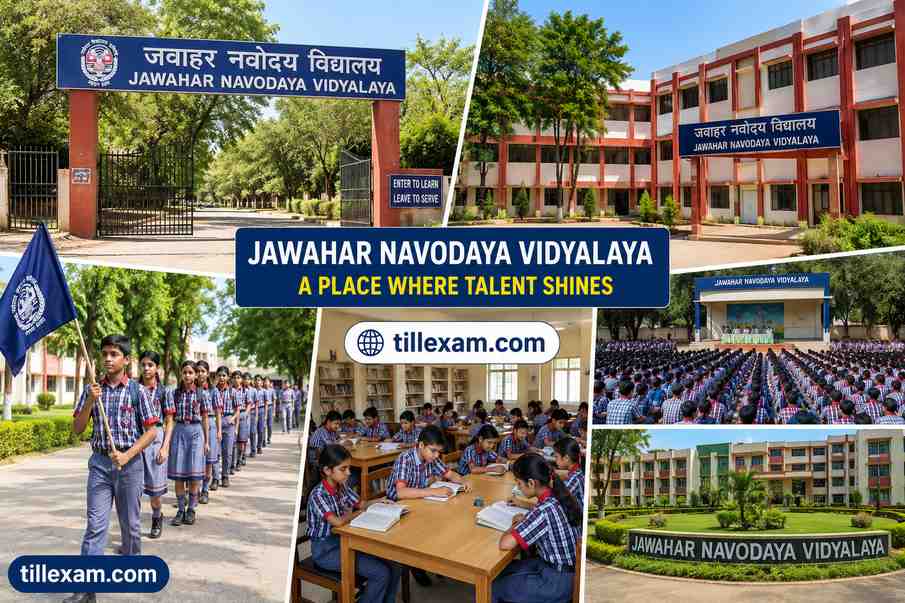
For students from economically weaker backgrounds, these facilities significantly reduce the financial burden while ensuring access to quality education.
Is There Any Fee in Jawahar Navodaya Vidyalaya?
Education from Class VI to Class VIII is completely free for all admitted students.
For students studying in Classes IX to XII, a nominal Vidyalaya Vikas Nidhi (VVN) contribution is applicable. However, SC, ST, Divyang, all Girl Students, and students belonging to Below Poverty Line (BPL) families are exempted from this contribution as per NVS rules. Additional provisions also apply for wards of government employees.
JNVST 2027 Eligibility Criteria
Before submitting the online application, candidates must carefully ensure that they satisfy every eligibility condition prescribed by Navodaya Vidyalaya Samiti.
Failure to meet even one eligibility condition may result in cancellation of candidature at any stage of the admission process.
Educational Qualification
Candidates must satisfy the following educational requirements:
- Must be studying in Class V during the academic session 2026–27.
- Must study in a Government, Government-aided, Government-recognized school, or an eligible National Institute of Open Schooling (NIOS) institution.
- Must complete the entire academic session in Class V.
- Must have studied Classes III, IV, and V continuously without skipping any class.
- Candidates who have already passed Class V in previous academic sessions or repeated Class V are not eligible to apply.
Age Limit for JNVST 2027
The applicant should have been born between 01 May 2015 and 31 July 2017 (both dates inclusive).
This age criterion is applicable to candidates belonging to General, OBC, SC, ST, EWS, and Divyang categories alike. Candidates found outside the prescribed age range will not be eligible for admission.
District Eligibility
Admission to Jawahar Navodaya Vidyalayas is district-specific.
A candidate is generally eligible to apply only for the JNV located in the district where they are a bona fide resident and are studying in Class V. In certain cases, if the Class V school is located in a neighbouring district within the prescribed distance, candidates may still be eligible, subject to the conditions laid down by NVS. Applicants must submit the form for the JNV of their district of residence only. Incorrect district selection can lead to cancellation of candidature even after provisional selection.
Who Cannot Apply?
The following candidates are not eligible for JNVST 2027:
- Students who have already passed Class V before the 2026–27 academic session.
- Students repeating Class V.
- Candidates who have previously appeared for JNVST for Class VI.
- Candidates who do not meet the prescribed age criteria.
- Students who skipped Class III or Class IV.
- Candidates studying in unrecognized schools.
- Applicants providing incorrect residence or eligibility details.
Since the application data is verified electronically and during document verification, any false declaration may result in immediate cancellation of candidature.
JNVST 2027 Reservation Policy
Navodaya Vidyalaya Samiti follows the reservation policy prescribed by the Government of India to ensure equal educational opportunities for students from different social and economic backgrounds.
The reservation is provided under the following categories:
- Rural Candidates
- Urban Candidates
- Scheduled Caste (SC)
- Scheduled Tribe (ST)
- Other Backward Class (OBC – Central List)
- Girls
- Divyang (Persons with Disabilities)
All reservations are applicable only after successful verification of supporting documents during the admission process.
Rural Reservation
One of the most important features of Jawahar Navodaya Vidyalaya admissions is the reservation for rural students.
Key Highlights
- At least 75% of the available seats in every district are filled by candidates studying in rural areas.
- Rural reservation is determined based on the location of the school where the student studied Classes III, IV, and V, not merely the residential address.
- Candidates applying under the rural quota must have completed the full academic sessions of Classes III, IV, and V in Government, Government-aided, or Government-recognized schools located in notified rural areas.
- NIOS candidates applying under the rural quota must produce a Rural Area Certificate issued by the competent authority if selected.
This reservation aims to provide quality education to talented children from rural India.
Urban Candidates
Students who studied in schools located in urban areas are considered urban candidates.
Candidates should note the following:
- If a student has studied in an urban school even for one day during Classes III, IV, or V, the candidate will be treated as an urban applicant.
- Urban status depends on the official Government notification applicable on the last date of application submission.
Therefore, candidates must verify whether their school falls under the rural or urban category before submitting the application form.
SC Reservation
Reservation for Scheduled Caste candidates is provided according to the SC population of the respective district.
However:
- The reservation will not be less than 15% (national average).
- A valid caste certificate issued by the competent authority is mandatory during admission.
ST Reservation
Scheduled Tribe candidates are also provided reservation based on the ST population in the concerned district.
Important points:
- Reservation shall not be less than 7.5%.
- SC and ST reservation together cannot exceed 50%.
- Valid ST certificate must be produced during document verification.
OBC Reservation
Candidates belonging to the Other Backward Classes (OBC) are eligible for reservation under the Central Government rules.
Important conditions include:
- 27% reservation is available for OBC candidates included in the Central OBC List.
- Candidates must possess a valid Central OBC Certificate issued before the prescribed date.
- Candidates having only a State OBC certificate or those not included in the Central List must apply under the General category.
Incorrect OBC claims may lead to cancellation of candidature during verification.
Reservation for Girls
Navodaya Vidyalaya Samiti encourages girls’ education by ensuring that:
- At least one-third (33%) of the total seats are filled by girl candidates.
- If required, girls may receive preference during the selection process to maintain the prescribed reservation.
This initiative supports equal educational opportunities for girls across the country.
Reservation for Divyang Candidates
Reservation is available for eligible Persons with Disabilities (PwD), including:
- Orthopedically Handicapped
- Hearing Impaired
- Visually Impaired
- Acid Attack Victims
- Dwarfism
- Other benchmark disabilities as per Government norms
Candidates claiming reservation under this category must submit a valid UDID Card or a disability certificate issued by the competent medical authority during admission.
Reservation for Transgender Candidates
There is no separate reservation for transgender candidates.
However:
- They are eligible to apply.
- They are considered under the Boys’ category for reservation purposes, as per the existing NVS policy.
JNVST 2027 Application Fee
One of the biggest advantages of the Jawahar Navodaya Vidyalaya Selection Test is that no application fee is charged.
| Category | Application Fee |
|---|---|
| General | ₹0 |
| OBC | ₹0 |
| SC | ₹0 |
| ST | ₹0 |
| EWS | ₹0 |
| Divyang | ₹0 |
The complete registration process is free of cost for all eligible candidates.
Documents Required for JNVST 2027 Online Application
Candidates should keep the following documents ready before starting the online registration process.
Documents to Upload
- Recent passport-size photograph (JPG, 10 KB–100 KB)
- Candidate’s signature (JPG)
- Parent’s signature (JPG)
- Aadhaar Number (if available)
- Residence Certificate (if Aadhaar is unavailable)
- APAAR ID (if applicable)
- PEN Number (if applicable)
Ensure that all uploaded files are clear and within the prescribed size limits.
Documents Required After Selection
Provisionally selected candidates must produce original documents at the time of admission.
The required documents include:
- Birth Certificate
- Residence Certificate of the district
- Class III, IV & V Study Certificate
- Transfer Certificate (TC)
- Aadhaar Card
- Rural Area Certificate (if applicable)
- SC/ST/OBC Certificate (if applicable)
- Disability Certificate/UDID (if applicable)
- Migration Undertaking
- Any other document prescribed by NVS
Failure to produce valid original documents may result in cancellation of admission.
Aadhaar Requirement
Navodaya Vidyalaya Samiti has integrated Aadhaar authentication into the admission process.
Important Points
- Candidates should preferably provide their Aadhaar Number during registration.
- If Aadhaar is unavailable, candidates may upload a valid Residence Certificate and complete Aadhaar enrolment later.
- Personal details entered in the application should exactly match the Aadhaar records.
- Aadhaar verification may be conducted during the admission process.
Parents are advised to update any incorrect information in Aadhaar before submitting the application form.
How to Apply Online for JNVST 2027
Candidates can submit their applications through the official NVS admission portal by following these steps.
Step 1
Visit the official Navodaya Vidyalaya Samiti admission portal.
Step 2
Read the complete notification carefully before proceeding with registration.
Step 3
Click on JNVST 2027 Class VI Admission Registration.
Step 4
Enter the required personal information such as:
- Candidate’s Name
- Parent’s Name
- Date of Birth
- District
- Block
- Category
- Gender
- Aadhaar Number
- Mobile Number
Step 5
Fill all educational details correctly.
Step 6
Upload the required documents in JPG format.
Step 7
Verify every detail carefully before final submission.
Step 8
Submit the application form.
Step 9
Download and print the confirmation page for future reference.
The online application can be submitted using a desktop, laptop, tablet, or smartphone. Candidates who need assistance may also visit the nearest Jawahar Navodaya Vidyalaya Help Desk, where registration support is provided free of cost.
Correction Window
Navodaya Vidyalaya Samiti provides a correction window after the application deadline for specific fields.
Candidates may be allowed to edit details such as:
- Gender
- Category
- Disability Status
- Rural/Urban Area
- Medium of Examination
No correction is permitted beyond the notified correction period. Therefore, candidates should fill in their application carefully during the initial registration.
Common Mistakes to Avoid While Filling the Application Form
Many applications are rejected due to avoidable mistakes. Candidates should ensure that they do not:
- Select the wrong district.
- Enter an incorrect date of birth.
- Claim OBC reservation without a valid Central OBC certificate.
- Upload blurred photographs or signatures.
- Choose the wrong Rural/Urban category.
- Enter incorrect Aadhaar details.
- Provide false educational information.
- Wait until the last day to submit the application.
Cross-check all details before final submission, as the information entered forms the basis for eligibility verification and admission.
Important Instructions for Candidates
Candidates should remember the following instructions before submitting the online application:
- Apply only if all eligibility conditions are fulfilled.
- Use an active mobile number for registration.
- Keep all original documents ready.
- Preserve the registration number and confirmation page.
- Regularly visit the official website for updates regarding the admit card, correction window, and examination.
- Read the official prospectus carefully before applying.
JNVST 2027 Exam Pattern
The Jawahar Navodaya Vidyalaya Selection Test (JNVST) is an objective-type entrance examination conducted offline using an OMR Answer Sheet. The examination evaluates a student’s logical reasoning, arithmetic ability, environmental awareness, and language proficiency.
JNVST 2027 Exam Pattern
| Particular | Details |
|---|---|
| Mode of Examination | Offline (OMR Based) |
| Question Type | Multiple Choice Questions (MCQs) |
| Total Questions | 80 |
| Total Marks | 100 |
| Duration | 2 Hours |
| Exam Timing | 11:30 AM – 1:30 PM |
| Extra Time for Divyang Candidates | 40 Minutes |
Section-wise Exam Pattern
The JNVST 2027 question paper consists of three sections.
| Section | Questions | Marks | Time |
|---|---|---|---|
| Mental Ability Test (MAT) + Environmental Studies (EVS) | 40 | 50 | 60 Minutes |
| Arithmetic Test | 20 | 25 | 30 Minutes |
| Language Test | 20 | 25 | 30 Minutes |
| Total | 80 | 100 | 120 Minutes |
Each candidate receives one combined question booklet containing all three sections.
JNVST 2027 Marking Scheme
Candidates should understand the marking scheme before starting their preparation.
Marking Rules
- Every correct answer carries 1.25 marks.
- There is no negative marking.
- Unattempted questions do not attract any penalty.
- Candidates are encouraged to attempt all questions if possible.
This no-negative-marking policy allows students to answer every question without fear of losing marks for incorrect responses.
Minimum Qualifying Marks
To remain eligible for selection, candidates are expected to secure the minimum qualifying marks prescribed for each section.
| Section | Minimum Qualifying Marks |
|---|---|
| Mental Ability + EVS | 14 Marks |
| Arithmetic | 7 Marks |
| Language | 7 Marks |
Meeting the minimum marks in individual sections is important for consideration in the selection process.
Detailed JNVST 2027 Syllabus
The syllabus is designed to test the fundamental knowledge and aptitude expected from Class V students.
1. Mental Ability Test (MAT)
The Mental Ability Test is a non-verbal reasoning section. It measures a student’s analytical thinking, observation skills, logical reasoning, and problem-solving ability.
Topics include:
- Pattern Completion
- Figure Series
- Geometrical Figure Completion
- Mirror Images
- Water Images
- Embedded Figures
- Analogy
- Classification
- Visual Reasoning
- Logical Patterns
- Alphabetical Patterns
- Number Patterns
- Shape Recognition
Students should practice a variety of non-verbal reasoning questions to improve speed and accuracy.
2. Environmental Studies (EVS)
Environmental Studies follows an interdisciplinary approach combining Science, Social Science, and Environmental Education.
Major topics include:
The Natural World
- Rivers
- Mountains
- Forests
- Plants
- Animals
- Water Cycle
- Transportation
- Natural Disasters
- Types of Houses
Human Body
- Food and Nutrition
- Hygiene
- Cleanliness
- Digestive System
- Respiratory System
- Circulatory System
- Human Senses
Science in Daily Life
- Water Conservation
- Soil Conservation
- Food Preservation
- Air Pollution
- Water Pollution
Social Environment
- National Symbols
- Indian States and Capitals
- Festivals of India
- Seasons
- Important Crops
- Clothing and Fibres
- Famous Places
- Superlatives of India
The EVS section may also include a reading passage followed by multiple-choice questions to assess comprehension and practical understanding.
3. Arithmetic Test Syllabus
The Arithmetic section evaluates mathematical concepts generally covered up to Class V.
Important topics include:
- Number System
- Place Value
- Ascending & Descending Order
- Four Fundamental Operations
- Factors and Multiples
- Prime Numbers
- Fractions
- Addition & Subtraction of Fractions
- Multiplication of Fractions
- Simplification
- Measurement
- Length
- Weight
- Capacity
- Time
- Money
- Unit Conversion
- Perimeter
- Area of Rectangle
- Area of Square
- Basic Geometry
- Angles
- Data Interpretation
- Bar Graphs
- Tables
- Pictographs
The emphasis is on understanding concepts and applying them rather than memorizing formulas.
4. Language Test
The Language Test checks the student’s reading ability, grammar, vocabulary, and comprehension.
The section generally includes:
- Reading Comprehension
- Vocabulary
- Grammar
- Sentence Formation
- Fill in the Blanks
- Synonyms
- Antonyms
- Idioms
- Error Detection
- Paragraph Understanding
Students should regularly practice reading passages and grammar exercises to improve their performance.
Medium of Examination
The JNVST 2027 examination will be conducted in multiple languages depending on the State or Union Territory.
These include:
- English
- Hindi
- Urdu
- Bengali
- Assamese
- Gujarati
- Marathi
- Telugu
- Kannada
- Malayalam
- Tamil
- Punjabi
- Nepali
- Oriya
- Khasi
- Garo
- Mizo
- Manipuri
- Bodo
- And other notified regional languages.
Candidates must carefully select their preferred language while filling out the application form, as changes are generally not permitted later.
OMR Answer Sheet Instructions
The examination uses an Optical Mark Recognition (OMR) answer sheet.
Important instructions:
- Use only a Blue or Black Ball Point Pen.
- Do not use a pencil.
- Do not use correction fluid or erasers.
- Fill only one circle for each question.
- Ensure the booklet number matches the OMR sheet.
- Avoid overwriting or multiple markings.
Improper marking may prevent the OMR scanner from reading the response correctly.
Admit Card
The JNVST 2027 Admit Card will be released online before the examination.
Candidates should:
- Download the admit card from the official NVS portal.
- Verify all personal details.
- Carry the admit card to the examination centre.
- Bring Aadhaar Card or another approved identity/residence document as required.
- Reach the examination centre before the reporting time.
No candidate will be allowed to appear for the examination without a valid admit card.
JNVST 2027 Result
The result of JNVST 2027 is expected to be declared by the end of March 2027.
Candidates can check their result through:
- Official NVS Admission Portal
- Concerned Jawahar Navodaya Vidyalaya
- District Education Officer
- District Magistrate Office
- Regional NVS Office
Selected candidates may also be informed through the respective Jawahar Navodaya Vidyalaya.
Selection Process
Admission to Class VI is completed in the following stages:
Stage 1
Submission of Online Application
↓
Stage 2
Issue of Admit Card
↓
Stage 3
JNVST Written Examination
↓
Stage 4
Preparation of Merit List
↓
Stage 5
Document Verification
↓
Stage 6
Final Admission
Selection remains provisional until all original documents are verified successfully.
Tie-Breaking Criteria
If two or more candidates secure the same marks, preference is given in the following order:
- Higher marks in Mental Ability Test and EVS.
- Higher marks in Arithmetic.
- ST candidate.
- SC candidate.
- OBC candidate.
- Girl candidate.
- Younger candidate.
These rules are applied only when candidates have identical total scores.
Preparation Tips for JNVST 2027
Students aiming for admission should follow a structured study plan.
Expert Tips
- Study NCERT Class V books thoroughly.
- Practice Non-Verbal Reasoning daily.
- Improve basic arithmetic calculations.
- Read English and Hindi passages regularly.
- Solve previous year question papers.
- Attempt full-length mock tests.
- Focus on time management.
- Revise weak topics every week.
Practice with Free JNVST 2027 Mock Tests
Preparing with JNVST 2027 Mock Tests is one of the most effective ways to improve your performance in the Jawahar Navodaya Vidyalaya Selection Test. Since the exam includes Mental Ability, Environmental Studies (EVS), Arithmetic, and Language, regular practice helps students become familiar with the latest exam pattern, question types, and time management.
At TillExam.com, students can access free JNVST 2027 Mock Tests, topic-wise practice sets, previous year question papers, model papers, and online quizzes designed according to the latest Navodaya syllabus. These mock tests simulate the real examination environment, helping students identify their strengths and improve weaker subjects before the actual exam.
Benefits of Practicing JNVST Mock Tests
- Understand the latest JNVST exam pattern and marking scheme.
- Improve speed, accuracy, and time management.
- Strengthen Mental Ability, EVS, Arithmetic, and Language skills.
- Identify weak topics and focus on targeted revision.
- Build confidence before the entrance examination.
- Experience a real exam-like environment with objective-type questions.
- Analyze performance and track preparation progress.
👉 Start your preparation today with TillExam.com’s Free JNVST 2027 Mock Test Series and increase your chances of securing admission to Jawahar Navodaya Vidyalaya.
Frequently Asked Questions (FAQs)
Q1. What is the last date to apply for JNVST 2027?
The last date to submit the online application is 31 July 2026.
Q2. When will the JNVST 2027 exam be conducted?
The examination is scheduled for 28 November 2026.
Q3. Is there any application fee?
No. The application process is completely free for all eligible candidates.
Q4. Is there negative marking?
No. There is no negative marking in JNVST 2027.
Q5. How many questions are asked?
The examination consists of 80 objective-type questions carrying 100 marks.
Q6. Can NIOS students apply?
Yes. Eligible NIOS students meeting the prescribed conditions may apply.
Important Official Links
| Particular | Link |
|---|---|
| Official Website | https://navodaya.gov.in |
| JNVST Notification | Click Here |
| Apply Online | Click Here |
| Online Mock Test | Click Here |
Conclusion
The Jawahar Navodaya Vidyalaya Selection Test (JNVST) 2027 offers a valuable opportunity for talented Class V students to secure admission to one of India’s leading residential school systems. With free quality education, hostel facilities, experienced faculty, and a strong academic environment, Jawahar Navodaya Vidyalayas continue to help students build a bright future.
Candidates should complete the online application before the deadline, verify all eligibility conditions, prepare according to the latest syllabus, and regularly practice mock tests and previous year papers. A disciplined preparation strategy can significantly improve the chances of selection.
For the latest JNVST 2027 updates, free mock tests, previous year question papers, practice sets, syllabus, answer keys, exam analysis, and admission guidance, keep visiting TillExam.com.
